
Hair Care for Locs and Braids: Keep Your Scalp Healthy While Your Hair Thrives
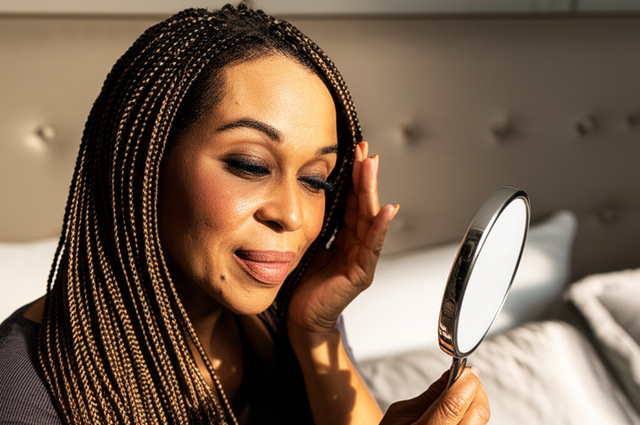
Let's be honest – you chose locs or braids for a reason. Maybe you're tired of spending hours on your hair every morning, or you want to protect your natural texture while it grows. But here's what nobody tells you: protective hairstyles can sometimes create their own set of challenges, especially when hormones start doing their thing in your 30s, 40s, and beyond.
If you're dealing with itchy scalp, thinning edges, or that weird flaky buildup that seems impossible to reach, you're not imagining things. Your scalp has needs that don't pause just because your hair is tucked away in a gorgeous protective style.
This isn't about doing everything "perfectly" – it's about understanding what's actually happening under there and making small changes that keep your scalp happy and your hair healthy. For targeted scalp support, you can explore our botanical hair growth serum here.
What's Actually Going On with Your Scalp
Here's the thing about protective styles – they're amazing for your hair, but they change how your scalp behaves. When your hair is braided or locked up for weeks or months, a few biological things happen:
Oil distribution gets wonky: Your natural scalp oils can't travel down your hair shaft like they normally would, so they build up at the roots
Dead skin cells accumulate: Without regular washing and brushing, your scalp's natural shedding process slows down, creating that flaky buildup
Hormonal changes amplify everything: Perimenopause, PCOS, and stress can make your scalp more sensitive and change how much oil you produce
Add in the fact that many of us are dealing with hormonal shifts that affect everything from our skin to our hair growth patterns, and suddenly that "low maintenance" style needs some actual maintenance.
How Scalp Issues Show Up in Real Life for Women 35-60
You know something's off when you start avoiding certain social situations because you're worried about scalp odor, or when you find yourself scratching unconsciously during Zoom calls. These aren't signs you're "dirty" or doing something wrong – they're your body telling you it needs different care.
The Perimenopause Effect on Protected Hair
If you're in your 40s or 50s, declining estrogen can make your scalp drier and more sensitive. What used to work for your scalp care routine might suddenly feel too harsh or not moisturizing enough. You might notice your locs or braids feeling more brittle, or your scalp getting irritated faster than it used to.
Stress and Sleep Impact Your Scalp Too
When you're running on four hours of sleep and your stress levels are through the roof (hello, sandwich generation life), your scalp produces more inflammatory compounds. This can lead to increased itching, flaking, and even slower hair growth – all happening underneath your protective style where you can't easily address it.
Practical, Low-Lift Actions You Can Start Now
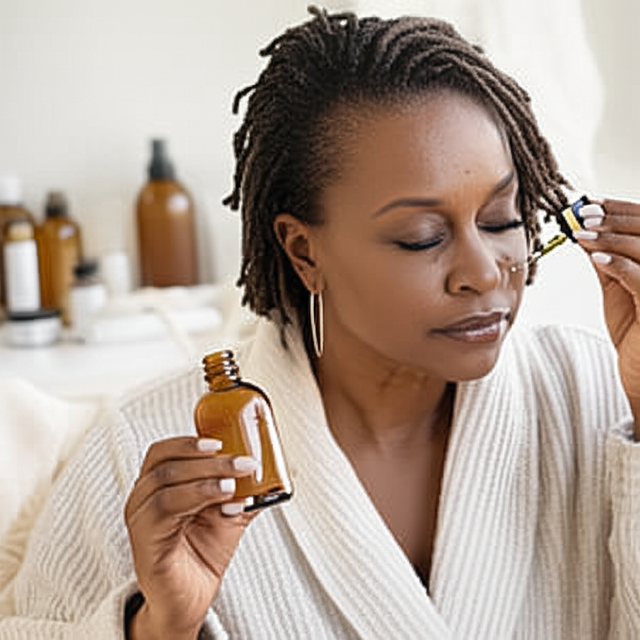
You don't need to overhaul your entire routine or spend hours you don't have. These are small changes that make a real difference:
Weekly scalp refresh with diluted apple cider vinegar: Mix 1 part ACV with 3 parts water in a spray bottle. Spray on your scalp (not the hair), let sit for 10 minutes, then rinse. This breaks down buildup and balances your scalp's pH without disrupting your style.
Sleep with a silk or satin pillowcase: This isn't just about preventing frizz – it reduces friction that can irritate your scalp and cause micro-tears in the skin. Less irritation means less itching and flaking.
Use a lightweight oil blend twice a week: Jojoba oil mixed with a drop of tea tree oil can penetrate to your scalp without leaving heavy residue. Apply with a dropper bottle directly to your scalp, then gently massage with your fingertips (not nails).
The key is consistency, not perfection. Pick one thing and do it for two weeks before adding anything else. Our botanical hair growth serum can also provide targeted support for scalp health and hair growth.
When It's Time to Get Extra Help
Sometimes DIY isn't enough, and that's completely normal. If you're dealing with persistent itching, significant hair thinning, or scalp issues that don't improve with consistent care, it might be time to consider additional support.
This is especially true if you're also dealing with other symptoms like irregular periods, unexplained weight changes, or extreme fatigue – all signs that hormonal shifts might be affecting your hair and scalp health. There's no shame in getting help. Taking care of your scalp health is taking care of your overall well-being.
Professional treatments, whether it's seeing a dermatologist who understands textured hair or exploring targeted scalp treatments, can address issues that basic home care can't touch. Some women find that addressing underlying hormonal imbalances or nutrient deficiencies makes a huge difference in their scalp and hair health.
Bottom Line
Your protective style should protect your hair, not create new problems for your scalp. The itching, flaking, and buildup you might be experiencing isn't because you're "doing it wrong" – it's because your scalp has needs that change with age, hormones, and life stress.
Small, consistent changes to your scalp care routine can make a huge difference in how your hair looks and feels, even when it's protected in locs or braids. You deserve to feel confident and comfortable in your style, and that starts with a healthy scalp foundation.
Keep reading
Tirzepatide Dose: How Dosing Works for Weight Loss
Tirzepatide dosing starts low and increases gradually over months. Here's exactly how the dose schedule works, what to expect at each level, and how clinicians adjust your protocol.
Semaglutide Cost With Insurance: 2024 Coverage Guide
Wondering what semaglutide actually costs with your insurance? We break down copays, prior authorization, eligibility rules, and how to navigate coverage in 2024.
GLP-1: The Complete Guide to How These Medications Work
GLP-1 medications have transformed medical weight loss. Here's exactly how they work, what to expect, and whether they're right for you — from mechanism of action to real-world results.
Oral Maintenance Options After GLP-1s
Transitioning off GLP-1 medications doesn't mean your progress has to stop. Learn about oral maintenance options that may help support healthy weight management and long-term success with Body Good Studio.
Maintenance Dosing vs Stopping GLP-1s: Which Is Right for You?
Should you continue maintenance dosing or stop GLP-1 treatment after reaching your weight goals? This blog explores the benefits, risks, and key factors to help you choose the best long-term approach with guidance from Body Good Studio.
What Causes Regain and How to Prevent It
Weight regain can happen for many reasons, from metabolic changes to lifestyle habits after losing weight. This blog explains the common causes and shares practical, science-backed strategies to help maintain long-term results with Body Good Studio.