
GLP-1 Hair Loss: Why Weight Loss Medications Cause Hair Shedding and What to Do About It

You've finally found a weight loss solution that's actually working. The numbers on the scale are dropping, your clothes fit better, and you're feeling more confident. Then you notice something alarming – hair in your shower drain, on your pillow, between your fingers when you run your hands through your hair.
Here's the thing: if you're on a GLP-1 medication like Wegovy, Ozempic, or semaglutide and experiencing hair shedding, you're not alone. This is one of those side effects nobody warns you about, but it's incredibly common – and more importantly, it's usually temporary and manageable.
Let's break down what's happening to your hair, why it's happening, and most importantly, what you can do to support your scalp and encourage healthy regrowth while staying on track with your weight loss goals. To explore a medically guided option for hair and scalp support, you can learn more about our Body Good program here.
What's Actually Going On: The Biology Behind GLP-1 Hair Loss
When you start losing weight rapidly – whether through GLP-1 medications or any other method – your body goes into what's essentially "resource conservation mode." Your hair follicles are among the first things to get deprioritized because, from a survival standpoint, hair growth isn't essential.
Telogen effluvium: This is the medical term for what's happening. Your hair follicles shift into a "resting" phase earlier than normal, causing increased shedding about 2-4 months after starting your medication.
Nutrient redistribution: Rapid weight loss can temporarily affect how your body absorbs and distributes nutrients like iron, protein, and B vitamins – all crucial for healthy hair growth.
Hormone fluctuations: GLP-1 medications can influence insulin and other hormones, which in turn affect hair growth cycles, especially if you're already dealing with perimenopause or PCOS.
How This Shows Up in Real Life for Women 35-60
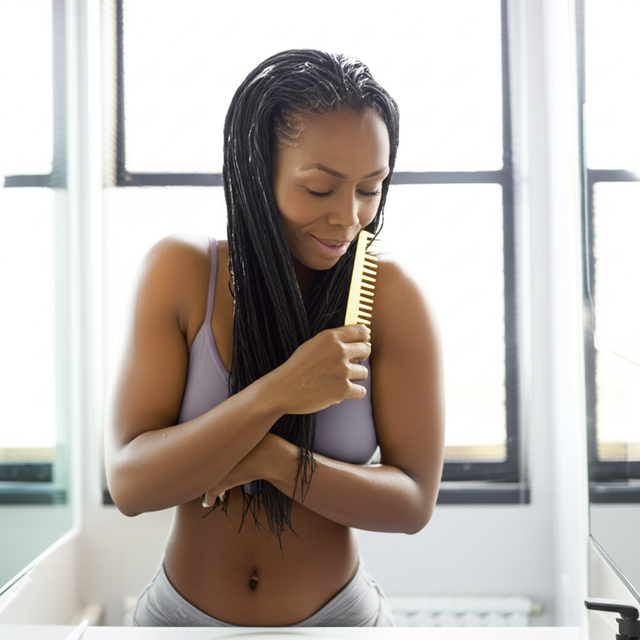
The hair shedding from GLP-1 medications doesn't happen overnight, and it doesn't look the same for everyone. You might notice your ponytail feels thinner, or that you're suddenly seeing scalp where you never did before.
The Perimenopause Stack
If you're in your 40s or early 50s, you're likely dealing with a double whammy. Perimenopause already messes with your hair through declining estrogen, and adding rapid weight loss to the mix can accelerate the process. You might notice thinning at your temples or crown, or that your hair texture has changed completely.
Stress and Sleep Disruption
Many women find that the lifestyle changes that come with GLP-1 treatment – eating less, feeling nauseous, adjusting to a new routine – can affect sleep and stress levels. Poor sleep and chronic stress are hair growth killers, creating a cycle where the very success of your weight loss journey is impacting your hair.
The good news? This type of hair loss is usually temporary. Most women see regrowth starting around 6-9 months after their weight stabilizes, but there are things you can do now to support the process. Our Body Good hair and scalp program offers targeted support during this transition.
Practical, Low-Lift Actions You Can Start Now
You don't need to overhaul your entire routine or spend hours on complicated treatments. Here are three realistic steps that can make a real difference:
Prioritize protein at every meal: Aim for 20-25 grams of protein per meal, even if you're eating smaller portions. Think Greek yogurt with nuts, eggs with avocado, or a protein smoothie. Your hair follicles need amino acids to rebuild.
Take a targeted supplement: Look for one that combines biotin, iron (if you're deficient), and B vitamins. Many women on GLP-1s benefit from additional nutritional support since they're eating less overall volume of food.
Be gentle with wet hair: Use a wide-tooth comb, avoid tight ponytails, and let your hair air-dry when possible. Wet hair is fragile hair, and being gentler can prevent additional breakage while your follicles are in recovery mode.
When It's Time to Get Extra Help
Sometimes DIY approaches aren't enough, especially if you're dealing with multiple factors like perimenopause, PCOS, or significant nutrient deficiencies alongside your GLP-1 treatment.
Consider medical support if you're experiencing severe thinning, if the hair loss continues beyond 6-9 months after your weight stabilizes, or if you have underlying conditions that affect hair growth. There's no shame in getting professional help – in fact, it's smart prevention.
Prescription treatments, targeted scalp therapies, and hormone optimization can all work alongside your weight loss journey. The key is finding a provider who understands that you don't want to choose between your weight loss success and your hair health.
Bottom Line
Hair shedding on GLP-1 medications is frustrating, but it's usually temporary and manageable. Your body is adjusting to rapid changes, and your hair follicles are simply responding to that adjustment. This doesn't mean you have to choose between your weight loss goals and your hair.
The most important thing to remember is that this phase will pass. With the right nutritional support, gentle hair care, and possibly some professional guidance, most women see their hair return to normal – and often healthier than before – as their weight stabilizes. You've already taken control of your health in one major way. Now it's time to give your hair the same attention and care.
Keep reading

How Poor Sleep Sabotages Your GLP-1 Results (And the Simple Fixes That Work)
Discover why poor sleep undermines GLP-1 weight loss and learn tiny habit shifts that boost your medication's effectiveness for better results.

How to Prevent Ozempic Face: Real Prevention Tips That Actually Work
Learn evidence-based ways to prevent Ozempic face during GLP-1 weight loss. Practical skincare and lifestyle tips for women 35-60.

GLP-1 Hair Shedding: Why It Happens and What You Can Do About It
Experiencing hair loss on GLP-1 medications? Learn why GLP-1 hair shedding happens and get practical fixes to protect your scalp health.

GLP-1 Hair Shedding: Why Your Hair is Thinning and What You Can Do About It
Experiencing hair loss on GLP-1 weight loss medication? Learn why GLP-1 hair shedding happens and practical ways to support your scalp health.

GLP-1 vs Hormone Therapy for Midlife Weight Gain: Which One Actually Works?
Confused about GLP-1s vs hormone therapy for midlife weight gain? Dr. Linda breaks down what actually works for women 35-60.

GLP-1 vs Hormone Therapy: Which Path Works for Midlife Weight Gain?
Struggling with midlife weight gain? Compare GLP-1 medications vs hormone therapy options designed specifically for women 35-60. Get real answers.