
How To Rebuild A Healthy Scalp Barrier — Scalp, Hormones, and Lifestyle Fixes
Let's be honest — your scalp has been through it. Maybe you're dealing with dryness, irritation, or that weird flaky situation that no amount of expensive shampoo seems to fix. If you're a woman in your 30s, 40s, or 50s, especially if you're Black or Latina, your scalp issues probably aren't just about the products you're using.
Here's the thing: your scalp barrier is like the bouncer at your hair follicles' exclusive club. When it's working right, it keeps the good stuff in (moisture, nutrients) and the bad stuff out (irritants, bacteria). But hormones, stress, and life have a way of messing with this system.
To explore how targeted nutrition can support your scalp health from the inside out, you can learn more about our Body Good program here: Learn more about Body Good's Hair, Skin & Nails program.
This article will break down what's really happening with your scalp barrier and give you realistic strategies that actually work for busy women who don't have time for 12-step hair routines.

What's Actually Going On With Your Scalp Barrier
Your scalp barrier is basically your scalp's protective shield. It's made up of skin cells, natural oils (sebum), and beneficial bacteria that work together to keep your scalp healthy. When this barrier gets damaged, your scalp becomes vulnerable to irritation, dryness, and inflammation.
Here's what typically breaks down your healthy scalp barrier:
Hormonal shifts — Estrogen drops during perimenopause reduce oil production, while stress hormones like cortisol can trigger inflammation and disrupt your scalp's natural balance
Over-cleansing and harsh products — Sulfates, alcohols, and frequent washing strip away your scalp's protective oils faster than your body can replace them
Environmental stress — Heat styling, UV exposure, pollution, and even hard water minerals can damage the delicate scalp barrier over time
The tricky part? Many women try to fix scalp problems by washing more or using stronger products, which actually makes the barrier damage worse.
How Scalp Barrier Damage Shows Up in Real Life for Women 35-60
You might not think "oh, my scalp barrier is compromised" when you're dealing with these issues, but here's how it actually looks in your daily life:
Your scalp feels tight after washing. You're dealing with flakes that aren't quite dandruff but won't go away. Your hair looks dull even when it's clean. You might have random itchy spots or areas that feel tender. And if you're going through perimenopause, everything seems to have gotten worse in the last few years.
The Perimenopause Scalp Stack
If you're in your 40s or 50s, declining estrogen is probably playing a major role in your scalp issues. Estrogen helps maintain skin thickness and oil production. As it drops, your scalp becomes thinner, drier, and more sensitive. This is why your favorite shampoo from your 30s might suddenly feel too harsh.
The Stress and Sleep Connection
Chronic stress elevates cortisol, which can disrupt your scalp's natural oil production and increase inflammation. Poor sleep makes this worse because that's when your body does most of its repair work. If you're running on 5-6 hours of sleep while managing work, family, and everything else, your scalp barrier doesn't get the recovery time it needs.
Practical, Low-Lift Actions You Can Start Now
You don't need to overhaul your entire routine. Here are three realistic changes that can help rebuild your healthy scalp barrier:
Wash less, condition the scalp more — Try washing every 3-4 days instead of daily. When you do wash, focus the shampoo on your roots only and use a gentle, sulfate-free formula. Apply conditioner to your scalp, not just your ends, and let it sit for 2-3 minutes before rinsing.
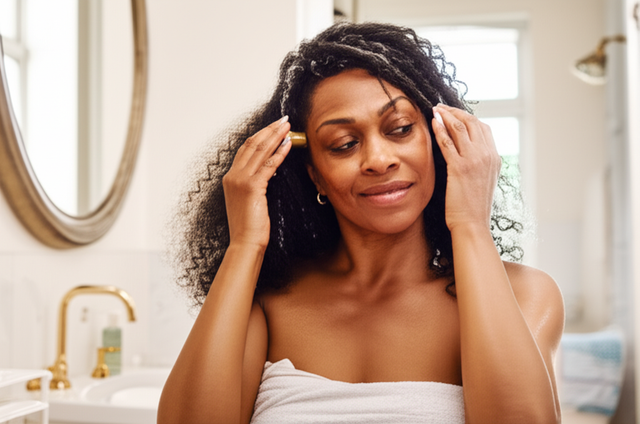
Do a weekly scalp massage with oil — Once a week, massage your scalp for 5 minutes with jojoba oil, coconut oil, or even olive oil from your kitchen. This stimulates blood flow and helps restore your natural moisture barrier. Do it while watching TV or before your shower.
Switch to a silk or satin pillowcase — Cotton pillowcases create friction that can irritate a compromised scalp barrier. Silk or satin reduces friction and helps your scalp retain moisture while you sleep. It's a one-time purchase that works 24/7.
Supporting your scalp health from within can make these external changes even more effective. Our Body Good program focuses on the nutrients your scalp needs to rebuild and maintain its protective barrier: Explore our comprehensive Hair, Skin & Nails support.
When It's Time to Get Extra Help
Sometimes your scalp barrier needs more support than lifestyle changes can provide, and that's completely normal. You're not failing if DIY approaches aren't enough.
Consider getting professional help if you're dealing with persistent itching, scaling, or inflammation that doesn't improve after 6-8 weeks of gentle care. A dermatologist can rule out conditions like seborrheic dermatitis or scalp psoriasis that require specific treatments.
You might also benefit from professional support if your scalp issues started around the time of other hormonal changes — irregular periods, hot flashes, or changes in your hair texture. A healthcare provider who understands women's hormones can help address the root cause, not just the symptoms.
Asking for help isn't giving up — it's being smart about your health. Your scalp barrier is connected to your overall hormonal health, stress levels, and nutrition. Sometimes rebuilding it requires addressing these deeper factors with targeted support.
For women who want to address scalp health comprehensively, our Body Good approach combines the nutrients your scalp needs with lifestyle guidance that actually works for busy women: Learn more about our Hair, Skin & Nails essentials program.
Bottom Line
Your scalp barrier problems aren't your fault, but they are fixable. The key is understanding that your scalp health is connected to your hormones, stress levels, and overall well-being — not just the products you use.
Start with gentle, consistent care and give your scalp barrier time to rebuild. Be especially patient if you're dealing with hormonal changes. And remember, there's no shame in getting professional support when you need it. You deserve a healthy scalp that feels comfortable and supports strong, beautiful hair.
Ready to Start Your Weight Loss Journey?
Take our quiz to find the best program for you
Take the Quiz →
Keep reading

How to Rebuild Your Scalp Barrier When Hormones Are Sabotaging Your Hair
Learn how to rebuild your scalp barrier naturally. Discover hormone-friendly solutions for healthier hair and scalp health that actually work.

Hair Care for Locs and Braids: The Real Talk Guide to Scalp Health and Hormonal Changes
Real talk about hair care for locs and braids during perimenopause. Learn how hormones affect your scalp and get practical tips that actually work.

Hair Oils vs Serums for Hair Regrowth: What Actually Works for Thinning Hair
Confused about hair oils vs serums for hair regrowth? Get the real talk on what works for hormonal hair thinning, scalp health, and lifestyle fixes.

Protective Styles for Scalp Health: Why Your Hair Needs More Than Just Good Intentions
Learn how protective styles support scalp health, especially during hormonal changes. Get practical tips for Black and Latina women dealing with hair concerns.

Hair Oils vs. Serums: Which Actually Works for Regrowth?
Struggling with hair loss? Learn the real difference between oils and serums for hair regrowth, plus what actually works for women over 35.

Why Your Scalp Barrier Is Breaking Down (And How to Fix It Without the Fancy Products)
Discover why hormones and stress wreck your scalp barrier, plus simple fixes that actually work for Black and Latina women dealing with scalp issues.