
Hair Oils vs Serums for Hair Regrowth: What Actually Works for Thinning Hair
Let's be honest – watching your hair thin out is devastating. Whether it's your edges creeping back, your part getting wider, or your ponytail feeling smaller, you've probably stood in the hair care aisle wondering: should I try oils or serums for hair regrowth?
Here's the thing – you're not losing your hair because you're not trying hard enough. For women 35-60, especially Black and Latina women, hair thinning is often about hormones, stress, and biology, not your hair care routine. But the right products can absolutely make a difference when you understand what's actually happening.
This article will break down the real difference between hair oils vs serums for hair regrowth, what's causing your hair changes, and practical steps that actually work for busy women dealing with real life.
To explore a medically guided option for hair regrowth, you can learn more about our Body Good peptide hair growth program here: Learn more about this Body Good program.
What's Actually Going On with Your Hair
Before we dive into hair oils vs serums for hair regrowth, let's talk about why your hair is changing in the first place. It's not just "getting older" – there's real biology happening.
Your hair follicles are incredibly sensitive to hormonal shifts. During perimenopause and menopause, estrogen drops while androgens (male hormones) become more dominant. This shrinks your hair follicles, making each strand thinner and causing some follicles to stop producing hair altogether.
Here's what's happening at the scalp level:
Follicle miniaturization: Your hair follicles literally shrink, producing thinner, shorter hairs before eventually stopping
Longer rest phases: Your hair spends more time in the "resting" phase and less time actually growing
Inflammation: Stress, poor sleep, and hormonal changes create low-level inflammation that disrupts healthy hair growth
How This Shows Up in Real Life for Women 35-60
You might notice your hair feels different when you're getting ready in the morning. Maybe your usual protective style doesn't look as full, or you're finding more hair on your pillow and in the shower drain.
The Perimenopause Hair Stack
If you're in your 40s or early 50s, perimenopause is likely playing a major role. Beyond the hormonal shifts, you're probably dealing with irregular periods, sleep disruption, and increased stress – all of which impact hair growth. Your scalp might feel more sensitive, and you may notice changes in hair texture along with thinning.
Stress and Sleep: The Hair Growth Killers
Chronic stress elevates cortisol, which directly interferes with hair growth cycles. Poor sleep compounds this by disrupting the growth hormone release that happens during deep sleep. If you're managing work, family, and everything else while barely sleeping, your hair follicles are getting the message to shut down non-essential functions – like growing hair.

Hair Oils vs Serums for Hair Regrowth: The Real Difference
Now let's get to the actual question: hair oils vs serums for hair regrowth. They work differently and serve different purposes.
Hair oils are primarily about scalp health and moisture. They can improve blood circulation to the scalp, reduce inflammation, and create a healthier environment for growth. Oils like rosemary, peppermint, and castor oil have some research backing their circulation-boosting properties.
Hair growth serums typically contain active ingredients designed to directly stimulate follicles or block DHT (the hormone that shrinks follicles). These might include peptides, growth factors, or ingredients like minoxidil.
Here's the truth: most women dealing with hormonal hair thinning need both approaches – scalp health AND targeted active ingredients.
For a comprehensive approach that combines both strategies, you can explore our medically-formulated peptide hair growth program here: Learn more about this Body Good program.
Practical, Low-Lift Actions You Can Start Now
You don't need a 12-step routine or expensive salon treatments. Here are three realistic steps that can make a difference:
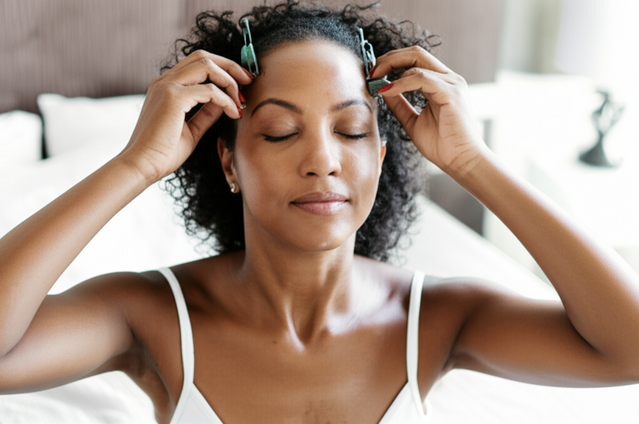
Scalp massage with purpose: 2-3 times per week, massage your scalp for 3-5 minutes while applying a growth oil or serum. Use firm pressure to boost circulation. Do this while watching TV or before bed – it doesn't need to be a separate thing.
Protect your sleep: Hair growth happens during deep sleep. Keep your bedroom cool, use a silk or satin pillowcase to reduce friction, and try to get 7+ hours consistently. If perimenopause insomnia is an issue, talk to your doctor about solutions.
Gentle, consistent care: Avoid tight styles that pull on your hairline, minimize heat styling, and be extra gentle when your hair is wet. Focus on keeping your scalp clean and healthy rather than trying harsh "growth" shampoos that strip your scalp.
When It's Time to Get Extra Help
Sometimes DIY scalp care and over-the-counter products aren't enough. If you've been consistent with a good routine for 3-4 months and aren't seeing improvement, or if your hair loss is rapid or patchy, it's time for medical support.
Prescription options like minoxidil, finasteride (for some women), hormone replacement therapy, or medical-grade peptide treatments can be game-changers. There's also platelet-rich plasma (PRP) therapy and other in-office treatments that can restart dormant follicles.
Getting help isn't "cheating" or admitting defeat. Hormonal hair loss is a medical issue that often requires medical solutions. The right treatment can not only stop further loss but actually regrow hair that you thought was gone forever.
To explore a medically guided peptide hair growth program that goes beyond what you can find at the drugstore, you can learn more about our Body Good program here: Learn more about this Body Good program.
Bottom Line
The debate between hair oils vs serums for hair regrowth doesn't have to be either/or. For most women dealing with hormonal hair thinning, the best approach combines scalp health (where oils excel) with targeted active ingredients (where serums shine).
Your hair changes aren't your fault – they're biology. But you have more options than ever to take control and see real improvement. Start with consistent scalp care and healthy habits, and don't hesitate to seek medical support when you need more powerful solutions. Your hair – and your confidence – are worth the investment.
Keep reading

How to Rebuild Your Scalp Barrier When Hormones Are Sabotaging Your Hair
Learn how to rebuild your scalp barrier naturally. Discover hormone-friendly solutions for healthier hair and scalp health that actually work.

Hair Care for Locs and Braids: The Real Talk Guide to Scalp Health and Hormonal Changes
Real talk about hair care for locs and braids during perimenopause. Learn how hormones affect your scalp and get practical tips that actually work.

How To Rebuild A Healthy Scalp Barrier — Scalp, Hormones, and Lifestyle Fixes
Discover how to rebuild a healthy scalp barrier with hormone-focused strategies and lifestyle fixes designed for busy women 35-60.

Protective Styles for Scalp Health: Why Your Hair Needs More Than Just Good Intentions
Learn how protective styles support scalp health, especially during hormonal changes. Get practical tips for Black and Latina women dealing with hair concerns.

Hair Oils vs. Serums: Which Actually Works for Regrowth?
Struggling with hair loss? Learn the real difference between oils and serums for hair regrowth, plus what actually works for women over 35.

Why Your Scalp Barrier Is Breaking Down (And How to Fix It Without the Fancy Products)
Discover why hormones and stress wreck your scalp barrier, plus simple fixes that actually work for Black and Latina women dealing with scalp issues.