
Protective Styles for Scalp Health: Why Your Hair Needs More Than Just Good Intentions
Let's be honest – if you're a Black or Latina woman over 35, you've probably noticed your hair doing some... interesting things lately. Maybe it's thinning at the temples, breaking more than usual, or just doesn't seem to grow like it used to. And everyone keeps telling you to "just do protective styles" like that's some magic solution.
Here's the thing: protective styles can absolutely help your scalp health, but only when you understand what's really going on with your hair and hormones. Because spoiler alert – it's probably not just about how you're styling it.
This article will break down why protective styles matter for scalp health, how hormonal changes after 35 mess with your hair game, and what you can actually do about it that doesn't involve spending your entire weekend in someone's kitchen getting braids.
To explore a medically guided option for hair concerns, you can learn more about our Body Good program here: Learn more about this Body Good hair support program.
What's Actually Going On With Your Hair and Scalp
Your scalp isn't just the thing your hair grows out of – it's a complex ecosystem that responds to everything from stress hormones to what you ate for lunch. When we talk about protective styles for scalp health, we're really talking about giving your scalp the environment it needs to do its job properly.
Here's what's happening under the surface:
Blood flow matters: Your hair follicles need good circulation to get nutrients and oxygen. Tight styles, stress, and hormonal changes can all mess with this flow.
Sebum production changes: As estrogen drops (hello, perimenopause), your scalp might produce less natural oils, leading to dryness and irritation.
Inflammation increases: Chronic stress, poor sleep, and hormonal fluctuations can create scalp inflammation that literally chokes your hair follicles.
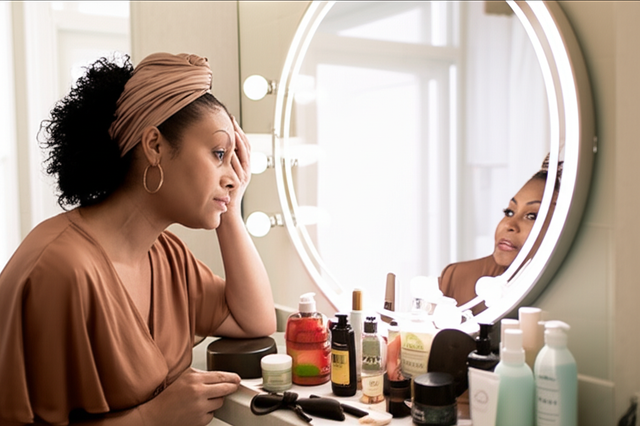
How This Shows Up in Real Life for Women 35-60
You know something's up when you start finding more hair in your shower drain than usual, or when that edge control that used to last all day suddenly gives up by noon. But scalp health issues show up in ways that go beyond just hair loss.
The Perimenopause Hair Stack
If you're between 35-55, your hormones are likely starting their slow-motion roller coaster ride. Estrogen and progesterone levels fluctuate wildly before they eventually drop, and your hair follicles feel every bump. You might notice your hair texture changing, your scalp getting more sensitive, or styles that used to work perfectly now causing breakage or irritation.
Stress and the Scalp Connection
Between work, kids, aging parents, and trying to have some semblance of a social life, your stress levels are probably through the roof. Chronic stress increases cortisol, which can shrink hair follicles and disrupt your scalp's natural balance. This is why that perfect protective style might suddenly start causing breakouts or excessive dryness along your hairline.
Practical, Low-Lift Actions She Can Start Now
You don't need to become a hair guru overnight or spend hundreds on products. Here are three realistic steps you can take this week:
Choose styles based on your current hair state, not Instagram goals: If your hair is already fragile from hormonal changes, super tight braids or heavy extensions will make things worse. Opt for looser protective styles like chunky twists, bantu knots, or even a simple silk scarf wrap.
Scale up your scalp care routine gradually: Start with massaging your scalp for just 2 minutes while you're watching Netflix. Use your fingertips (not nails) to stimulate blood flow. You can do this with or without oil – the massage itself makes a difference.
Track your hair changes with your cycle: If you're still menstruating, notice if your scalp gets oilier or drier at certain times of the month. This can help you time when to do deeper conditioning treatments or when to baby your edges a little more.

For women dealing with significant hair thinning or scalp issues, sometimes topical treatments can provide the extra support your hair follicles need. To explore a medically guided option, you can learn more about our Body Good program here: Learn more about this Body Good hair support program.
When It's Time to Get Extra Help
Here's what nobody talks about: sometimes your hair and scalp need more than good intentions and YouTube tutorials. If you've been doing everything "right" with protective styles but still seeing increased shedding, bald patches, or persistent scalp irritation, it might be time for medical support.
Hormone therapy, prescription scalp treatments, or even peptide-based hair growth serums can work alongside your protective styling routine to address the root cause of what's happening with your hair. This isn't about vanity – it's about supporting your body through a major hormonal transition.
Getting help doesn't mean you failed at taking care of your hair. It means you're smart enough to recognize when DIY solutions have reached their limit. Think of it like this: you wouldn't try to fix a broken bone with essential oils, so why should you expect traumatized hair follicles to respond to coconut oil alone?
Bottom Line
Protective styles for scalp health work best when you understand that your hair is responding to what's happening inside your body, not just what you're putting on it. Your hormones, stress levels, and overall health all play a role in how your scalp behaves and how your hair grows.
The good news? You don't have to figure this out alone, and you definitely don't have to accept that thinning hair or an unhappy scalp is just part of getting older. With the right combination of smart protective styling, scalp care, and medical support when needed, you can absolutely improve your hair health. To explore comprehensive support for your hair concerns, you can learn more about our Body Good program here: Learn more about this Body Good hair support program.
Ready to Start Your Weight Loss Journey?
Take our quiz to find the best program for you
Take the Quiz →
Keep reading

How to Rebuild Your Scalp Barrier When Hormones Are Sabotaging Your Hair
Learn how to rebuild your scalp barrier naturally. Discover hormone-friendly solutions for healthier hair and scalp health that actually work.

Hair Care for Locs and Braids: The Real Talk Guide to Scalp Health and Hormonal Changes
Real talk about hair care for locs and braids during perimenopause. Learn how hormones affect your scalp and get practical tips that actually work.

Hair Oils vs Serums for Hair Regrowth: What Actually Works for Thinning Hair
Confused about hair oils vs serums for hair regrowth? Get the real talk on what works for hormonal hair thinning, scalp health, and lifestyle fixes.

How To Rebuild A Healthy Scalp Barrier — Scalp, Hormones, and Lifestyle Fixes
Discover how to rebuild a healthy scalp barrier with hormone-focused strategies and lifestyle fixes designed for busy women 35-60.

Hair Oils vs. Serums: Which Actually Works for Regrowth?
Struggling with hair loss? Learn the real difference between oils and serums for hair regrowth, plus what actually works for women over 35.

Why Your Scalp Barrier Is Breaking Down (And How to Fix It Without the Fancy Products)
Discover why hormones and stress wreck your scalp barrier, plus simple fixes that actually work for Black and Latina women dealing with scalp issues.