
Hair Oils vs. Serums: Which Actually Works for Regrowth?
Let's be honest – you've probably tried both. Maybe you've got a cabinet full of rosemary oil bottles and fancy serums, wondering why your hair is still doing whatever it wants instead of growing back thick and healthy.
Here's the thing: most women get stuck choosing between oils and serums like it's some kind of hair care battle royale. But that's not really how hair regrowth works, especially when you're dealing with hormonal changes that come with being a woman over 35.
This article will break down what oils and serums actually do for your hair, when each one makes sense, and why the real answer might be addressing what's happening inside your body first.
To explore a medically guided option for comprehensive hair restoration, you can learn more about our Body Good program here: Learn more about this Body Good program.
What's Actually Going On with Hair Loss
Before we dive into oils versus serums, you need to understand why your hair is thinning in the first place. Most hair loss in women over 35 comes down to three main factors:
Hormonal shifts: Declining estrogen during perimenopause means less protection against DHT (the hormone that shrinks hair follicles)
Chronic inflammation: Stress, poor sleep, and blood sugar spikes create ongoing inflammation that disrupts the hair growth cycle
Nutrient deficiencies: Iron, protein, and B-vitamins are essential for hair growth, but many women aren't getting enough
Your hair follicles aren't broken – they're responding to what's happening in your body. This is why slapping products on your scalp without addressing the root cause often feels like you're fighting an uphill battle.
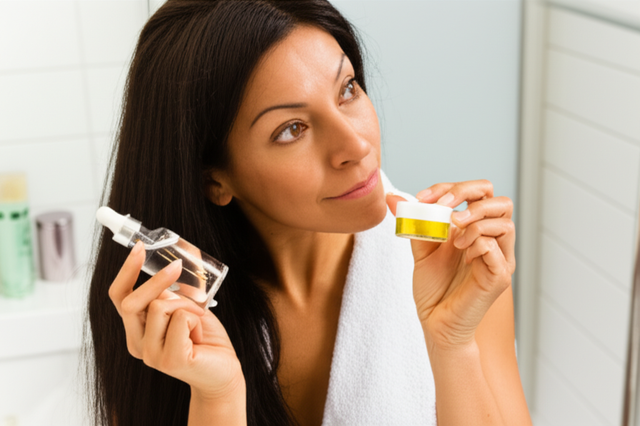
How Hair Loss Shows Up in Real Life for Women 35-60
Hair thinning doesn't just affect how you look – it changes how you feel about yourself every single day. Maybe you've started parting your hair differently to hide the thin spots, or you avoid certain hairstyles because they make the thinning more obvious.
The Perimenopause Hair Stack
If you're in your 40s or early 50s, you might be dealing with what feels like everything happening at once. Your hair is thinning, your skin is drier, you're gaining weight around your middle, and you're exhausted. This isn't coincidence – it's all connected to the same hormonal shifts.
Estrogen helps keep your hair in the growth phase longer. When it drops, more hairs shift into the shedding phase at the same time. You might notice your ponytail feels thinner, or you're seeing more hair in your brush than usual.
Stress and Sleep: The Hidden Hair Killers
Chronic stress and poor sleep create a perfect storm for hair loss. When you're constantly running on empty – managing work, kids, aging parents, and everything else – your body prioritizes survival over hair growth.
Cortisol (your stress hormone) can push hair follicles into a resting phase and increase inflammation throughout your body. Plus, when you're not sleeping well, your body can't repair and regenerate effectively.
Practical, Low-Lift Actions She Can Start Now
Here are three realistic steps you can take this week to support your hair growth, regardless of whether you choose oils, serums, or both:
Add protein to breakfast: Your hair is made of protein, so start your day with eggs, Greek yogurt, or a protein smoothie. Aim for at least 20 grams of protein in your first meal.
Do a 5-minute scalp massage while watching TV: Use whatever you have – coconut oil, a scalp massager, or just your fingertips. This improves blood flow to your follicles without adding another task to your day.
Take progress photos monthly: Hair growth is slow (about half an inch per month), so you need a way to track changes that isn't just how you feel in the moment. Same lighting, same angle, once a month.
For women dealing with significant hair thinning related to hormonal changes, you can explore our targeted approach here: Learn more about this Body Good program.
When It's Time to Get Extra Help
Here's when DIY approaches might not be enough: if you're losing more than 100-150 hairs per day for several months, if you're seeing bald patches, or if your hair loss is affecting your confidence and daily life.
Medical support for hair regrowth isn't about giving up or admitting defeat. Sometimes your body needs targeted intervention – whether that's addressing thyroid issues, balancing hormones, or using clinically-proven treatments like minoxidil or peptide-based serums.
The key is finding a provider who understands that hair loss in women over 35 is usually multifactorial. You want someone who will look at your whole picture – hormones, nutrition, stress levels, and scalp health – not just prescribe a one-size-fits-all solution.
Professional treatments can work alongside the lifestyle changes you're making, not instead of them. Think of it as giving your body the best possible chance to regrow healthy hair.
Bottom Line
The oils versus serums debate misses the bigger picture. Oils are great for scalp health and reducing breakage – they create the right environment for growth. Serums with active ingredients like minoxidil or peptides can stimulate follicles more directly. But neither will be as effective if you're not addressing the internal factors driving your hair loss.
Your hair loss isn't your fault, but it is something you can take control of with the right approach. Start with the basics – protein, scalp care, and stress management. Then layer in topical treatments that make sense for your specific situation. And remember, it's not weak to ask for professional help when you need it.
Ready to take a comprehensive approach to hair regrowth that addresses both internal and external factors? Learn more about this Body Good program.
Ready to Start Your Weight Loss Journey?
Take our quiz to find the best program for you
Take the Quiz →
Keep reading

How to Rebuild Your Scalp Barrier When Hormones Are Sabotaging Your Hair
Learn how to rebuild your scalp barrier naturally. Discover hormone-friendly solutions for healthier hair and scalp health that actually work.

Hair Care for Locs and Braids: The Real Talk Guide to Scalp Health and Hormonal Changes
Real talk about hair care for locs and braids during perimenopause. Learn how hormones affect your scalp and get practical tips that actually work.

Hair Oils vs Serums for Hair Regrowth: What Actually Works for Thinning Hair
Confused about hair oils vs serums for hair regrowth? Get the real talk on what works for hormonal hair thinning, scalp health, and lifestyle fixes.

How To Rebuild A Healthy Scalp Barrier — Scalp, Hormones, and Lifestyle Fixes
Discover how to rebuild a healthy scalp barrier with hormone-focused strategies and lifestyle fixes designed for busy women 35-60.

Protective Styles for Scalp Health: Why Your Hair Needs More Than Just Good Intentions
Learn how protective styles support scalp health, especially during hormonal changes. Get practical tips for Black and Latina women dealing with hair concerns.

Why Your Scalp Barrier Is Breaking Down (And How to Fix It Without the Fancy Products)
Discover why hormones and stress wreck your scalp barrier, plus simple fixes that actually work for Black and Latina women dealing with scalp issues.